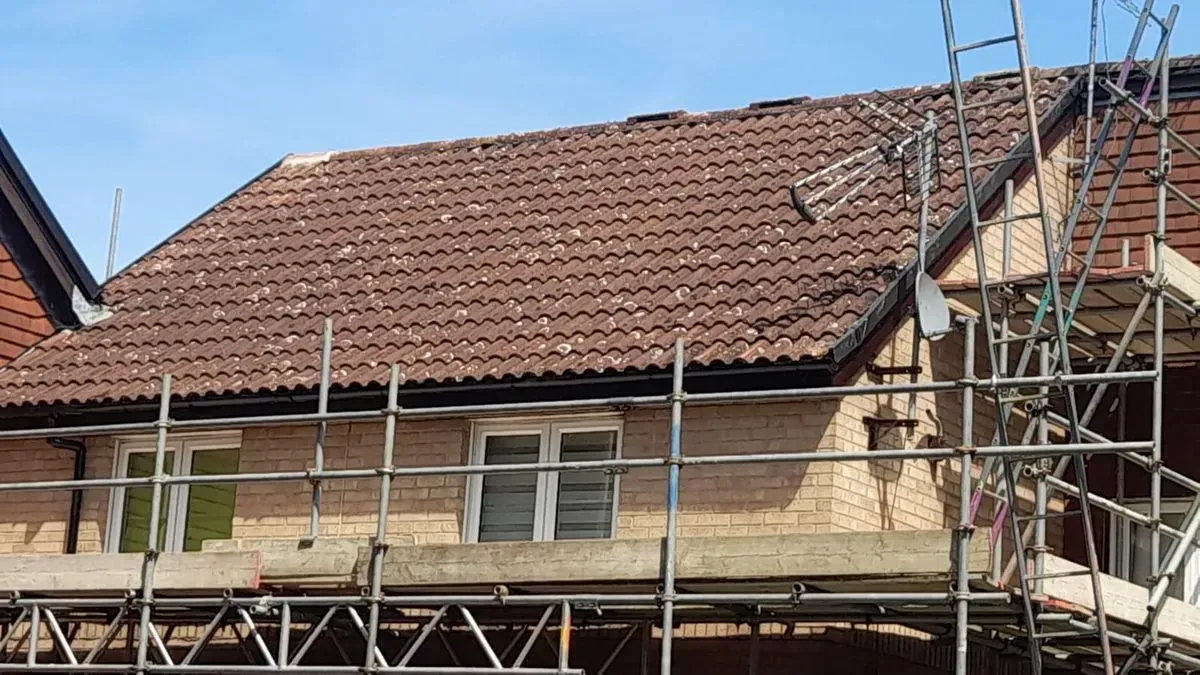
Most roof leaks we’re called to in January started as something small in October: a slipped tile, a blocked gutter, a cracked flashing. All cheap to fix early, expensive once the water’s in. Here’s a quick check you can do without a ladder.
From the ground (use your phone’s zoom)
- Roof tiles – gaps, slipped tiles or tiles at an odd angle.
- Ridge tiles – missing or crumbling mortar along the top.
- Chimney – lead flashing, pots, and missing mortar.
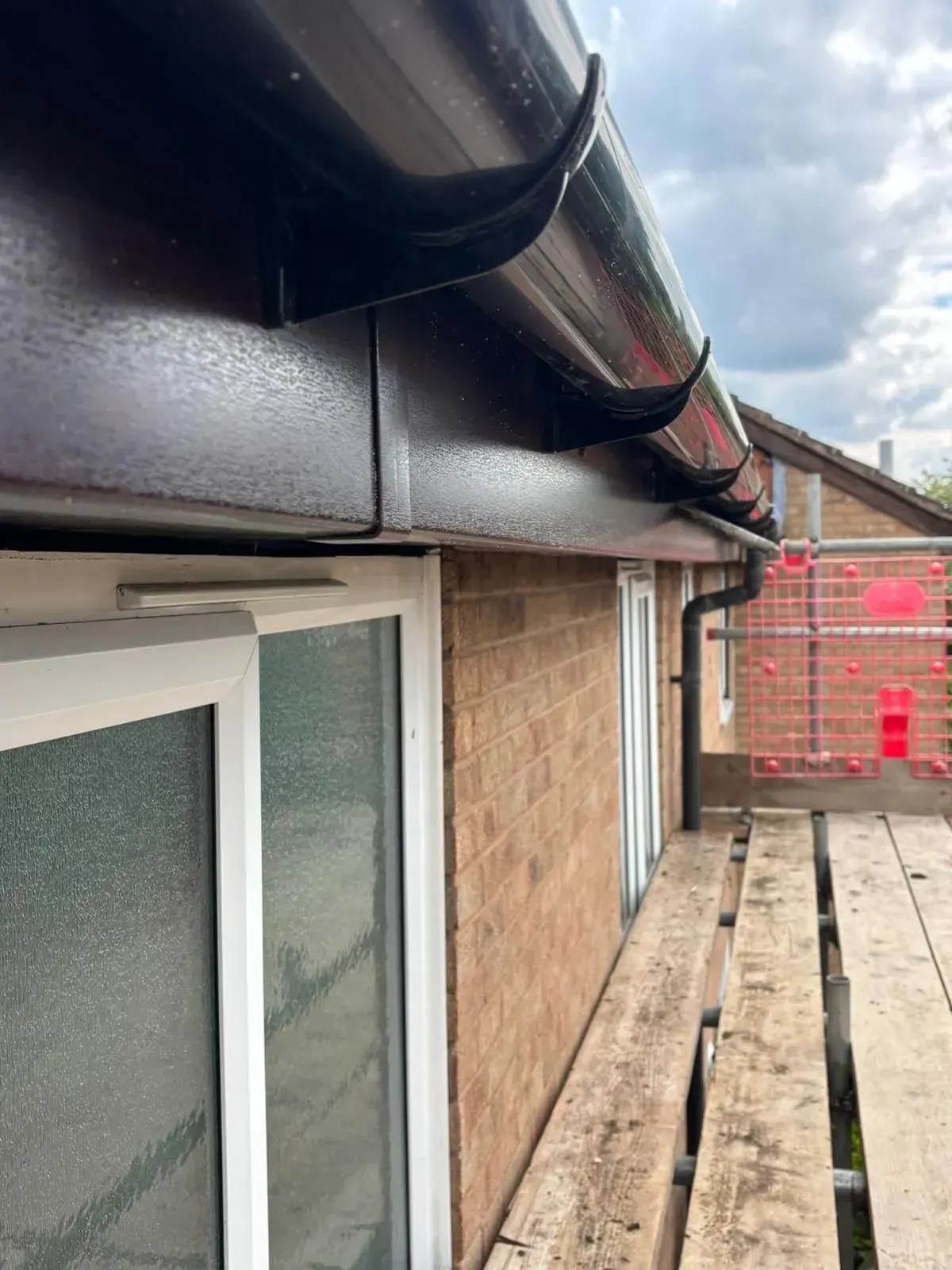
- Gutters – plants growing, sagging sections, or overflowing in rain.
- Downpipes – loose brackets and dark stains on the wall behind.
- Fascias and soffits – rotten or flaking boards, gaps, nesting birds.
- Flat roofs – puddles that stay for days, blisters or cracks.
From the loft (with a torch)
- Daylight where it shouldn’t be.
- Stains or tide marks on timbers or felt.
- Damp, dark timber near the chimney or eaves.
- Wet or flattened insulation.
What to do with what you find
| What you see | How urgent | Typical fix |
|---|---|---|
| Slipped tiles | Soon | Localised tile repair |
| Blocked or overflowing gutters | Before winter | Clean and realign |
| Rotten fascia boards | Plan it in | uPVC fascia and soffit replacement |
| Cracked chimney flashing | Soon | Renew leadwork |
| Ponding flat roof | Get it assessed | Repair or GRP/EPDM replacement |
| Active leak | Now | Emergency repair, then permanent fix |
Please stay off the ladder
If something needs a closer look, that’s our job. We use the right access for every height.